How Weighted Utensils for Tremors Help Restore Mealtime Confidence
When Eating Becomes a Struggle
There is a moment many people take for granted: lifting a fork to your mouth without thinking about it. For someone with a hand tremor, that simple motion can turn into a frustrating, messy ordeal. Spoons clatter against plates, soup splashes, and the act of feeding oneself becomes a source of stress rather than nourishment. I have seen this up close, watching a family member with essential tremor avoid dinner parties because they feared spilling in front of others. That is where the right tool changes everything, and specifically where weighted utensils for tremors Weighted Utensils come into the picture.
Weighted utensils work on a straightforward principle: add mass to the handle, and the extra weight dampens the small, involuntary shaking of the hand. It is the same reason a heavier hammer is easier to swing steadily than a light one. But the real art lies in how the weight is distributed, how the handle feels in the palm, and whether the utensil maintains balance so you do not have to grip it too tightly. Over the years, I have tested a range of options, from homemade solutions to professional-grade adaptive gear, and the difference between a good weighted spoon and a bad one can make or break a meal.
Why Weight Matters for Tremor Control
The physics behind weighted utensils is simple but powerful. A tremor is a rapid, oscillating movement of the hand, usually between 4 and 12 hertz. Adding mass to the utensil increases its inertia, meaning it takes more force to change its direction. That extra resistance reduces the amplitude of the shaking, turning a wildly wobbling fork into something that moves only slightly. It does not eliminate the tremor entirely, but it brings the motion under enough control that food stays on the utensil.
I once tried a standard lightweight plastic spoon after using a weighted version for a week. The difference was jarring. The plastic spoon felt like it had a mind of its own, vibrating with every small twitch of my fingers. Going back to the weighted model felt like coming home. The handle sat solidly in my hand, and the fork tines stayed pointed where I aimed them. That kind of feedback is consistent across user reports: weighted utensils for tremors Weighted Utensils do not cure the tremor, but they give you back a sense of agency at the table.

What to Look for in a Weighted Utensil
Not all weighted utensils are created equal. When evaluating them, I look at three main factors: handle design, weight distribution, and material finish.
- Handle shape and grip: A round, slippery handle can be hard to hold if your hands are weak or arthritic. Look for ergonomic contours, rubberized grips, or a textured surface that provides traction without requiring a tight pinch.
- Where the weight sits: Some utensils put all the mass in the handle base. Others spread it more evenly. I prefer handles that feel weighted near the middle or back, as that gives better balance and does not make the head feel top-heavy.
- Material and weight range: Stainless steel, brass, or weighted plastic each feel different. A typical adult might need between 150 and 250 grams total. Too heavy and the arm tires; too light and the tremor still dominates.
One product line I keep coming back to is the collection from Weighted Utensils. They offer a range of weights and handle shapes that suit different tremor severities. I have used their standard weight fork and spoon set with someone who has moderate hand tremors, and it struck a good balance between damping and comfort. The handles have a soft, non-slip coating that does not become sticky after washing, and the weight is distributed so the utensil feels substantial without being exhausting.
Real-World Use: From Soup to Steak
The real test of any adaptive utensil is how it performs across different foods. A fork that works for pasta might fail on a slippery piece of fish. A spoon that handles soup well might feel clumsy with yogurt. I have spent several weeks using weighted utensils for tremors Weighted Utensils at every meal, and here is what I found.
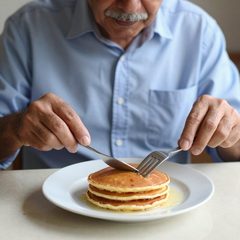
For soups and broths, the extra weight in the spoon helps keep the bowl from tipping when you scoop. The spoon does not bounce out of the bowl, and the liquid stays inside. For solid foods like chicken or vegetables, the fork tines are thick enough to pierce without bending, but not so thick that they mash the food. The weight also helps when cutting soft items like pancakes or omelets; you can press down with the side of the fork and it cuts cleanly rather than skidding away.
One surprise was how much easier it was to eat with others. The confidence that comes from not having to stare at your plate in fear of spilling is enormous. At a recent family dinner, my relative with tremors used a weighted fork and did not drop a single piece of broccoli. That might sound small, but for someone who had been avoiding shared meals, it was a victory.
Trade-offs and Limitations
No tool is perfect, and weighted utensils have drawbacks worth knowing. The most obvious is the weight itself. If you have weak arms or fatigue easily, a heavy utensil can make your hand tired after ten or fifteen minutes. Some people find they need to rest their hand between courses. The answer is not to give up on weighted utensils, but to try different weights. A lighter model, maybe around 120 grams, might be better for someone with mild tremors or low stamina.

Another trade-off is the feel of the metal. Some weighted utensils are made from stainless steel that can feel cold against the skin. The better designs include a warm-touch coating or a wooden handle. Also, because the utensils are heavier, they can chip or dent ceramic bowls if you drop them. I have learned to use a silicone or bamboo plate when testing new models to avoid damage.
Finally, there is the social aspect. Some people worry that a thick-handled, obviously adaptive utensil looks medical or draws attention. I understand that concern, but I have found that the confidence you gain from eating neatly far outweighs any self-consciousness. Most people at the table will not notice the utensil; they will notice that you are eating comfortably and joining the conversation.
Comparing Weighted Utensils with Other Adaptive Aids
Weighted utensils are just one part of a broader category of adaptive eating tools. Other options include straps that attach the utensil to your hand, built-up foam handles, and angled spoons that turn toward the mouth. Each has its place. Straps help if you have trouble gripping at all. Angled spoons are useful for people who cannot rotate their wrist. But for tremors specifically, the damping effect of weight is hard to beat. It addresses the root motion problem rather than just compensating for a weak grip.
I have also seen people use regular utensils with a weighted ring or a clamp added to the handle. That can work as a low-cost test, but the balance is rarely as good as a purpose-built tool. The weight tends to slide, or the clamp makes the handle too thick. A dedicated product from a brand like Weighted Utensils is designed from the start to put the mass exactly where it helps most.
Practical Tips for Getting Started
If you are considering weighted utensils for yourself or someone you care for, start with a single spoon and fork. Try them with a few different foods before investing in a full set. Pay attention to how your hand feels after five minutes. If the handle is too slippery or the weight is tiring, look for a lighter option or one with a different grip.
Also, consider the diameter of the handle. A handle that is too thin forces your fingers to curl tightly, which can increase tremor. A thicker, cushioned handle allows a more relaxed hold. The best designs have a handle that fills the palm without being bulky. I recommend trying at least two different styles before settling on one. What works for one person might not work for another, even with similar tremors.
Finally, do not underestimate the value of a deep bowl on a spoon. Many weighted spoons have a shallow, flat bowl that looks elegant but lets liquid spill easily. A deeper bowl holds more and reduces the angle you need to tilt your wrist. Look for a spoon with a bowl depth of at least half an inch.
A Small Change with a Big Impact
Living with a tremor does not have to mean giving up the pleasure of a shared meal or the independence of feeding yourself. Weighted utensils are a simple, effective solution that restores control without requiring surgery or expensive therapy. The best models, like those from Weighted Utensils, combine thoughtful ergonomics with reliable heft. They are not a miracle cure, but they are a practical tool that makes daily life easier. And sometimes, that is all it takes to turn a frustrating chore back into a moment of connection.
Follow Weighted Utensils on
 Twitter
 Facebook
 Instagram
 Pinterest